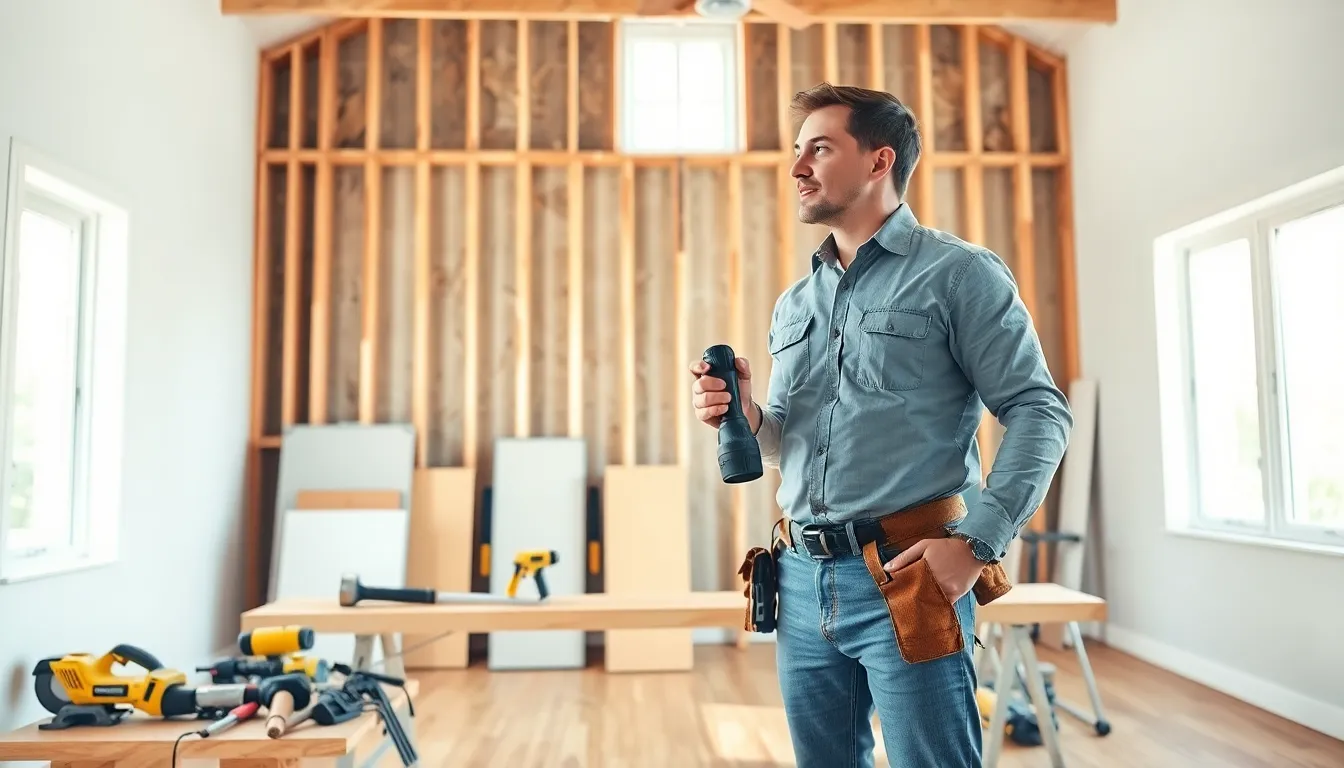
House flipping tools can make or break a renovation project. The right equipment saves time, reduces labor costs, and delivers professional results that boost resale value. Whether an investor handles demolition personally or oversees contractors, understanding which tools matter most is critical for success.
Profitable flips depend on efficiency. Every day a property sits unsold costs money in holding fees, insurance, and missed opportunities. Smart investors stock their toolkits strategically, prioritizing versatile equipment that performs across multiple projects. This guide covers the essential house flipping tools needed at each renovation stage, from tearing down walls to adding those final details that attract buyers.
Table of Contents
ToggleKey Takeaways
- The right house flipping tools save time, reduce labor costs, and deliver professional results that increase resale value.
- Demolition essentials include sledgehammers, pry bars, reciprocating saws, and dust control equipment like HEPA-filtered shop vacuums.
- Cordless drills, circular saws, and miter saws are must-have power tools for transforming gutted spaces into market-ready homes.
- Finishing tools such as sanders and paint sprayers help achieve professional results without hiring expensive specialists.
- Safety equipment—including respirators, safety glasses, and steel-toed boots—is non-negotiable to prevent injuries and keep projects on schedule.
- Knowing when to rent versus buy specialized house flipping tools is key to smart budgeting across multiple renovation projects.
Demolition and Deconstruction Tools
Demolition marks the starting point of most house flips. Investors need sturdy house flipping tools that handle everything from removing drywall to tearing out old cabinets.
A quality sledgehammer remains essential for breaking through walls and removing stubborn fixtures. Most flippers keep both an 8-pound and 12-pound version on hand. The lighter option works well for precision demo work, while the heavier hammer tackles structural elements.
Pry bars come in various sizes, and experienced investors own several. A 36-inch wrecking bar provides leverage for removing baseboards, door frames, and flooring. Smaller flat bars slip behind trim without damaging surrounding surfaces, useful when salvaging materials for resale or reuse.
Reciprocating saws cut through nearly anything: wood, metal, drywall, and even nails embedded in lumber. This versatility makes them indispensable during demo phases. Investors should stock multiple blade types to handle different materials without switching tools constantly.
Dust control equipment matters too. A shop vacuum with HEPA filtration removes debris and protects workers from harmful particles. Heavy-duty garbage bags and a sturdy wheelbarrow speed up cleanup, keeping the job site organized and safe.
For larger demolition projects, some investors rent equipment like jackhammers or dumpsters. Knowing when to rent versus buy is part of smart budgeting for house flipping tools.
Power Tools for Renovations
Once demolition wraps up, power tools take center stage. These house flipping tools transform gutted spaces into updated, market-ready homes.
A cordless drill ranks among the most-used tools on any flip. Investors should invest in a quality 20-volt model with lithium-ion batteries. Two batteries ensure one charges while the other works, eliminating downtime. Drill/driver combos handle both drilling holes and driving screws, reducing the number of tools needed.
Circular saws cut lumber, plywood, and sheet goods quickly. They’re faster than handsaws and more portable than table saws for on-site work. A 7.25-inch blade handles most cutting tasks common in renovation projects.
Miter saws deliver precise angled cuts for trim, molding, and framing. A 10-inch sliding compound miter saw offers the best combination of capacity and portability for house flippers. This investment pays off across dozens of projects.
Jigsaws excel at curved cuts and detail work. They’re perfect for cutting outlets in drywall, trimming countertops, or creating custom shapes. Variable speed control allows matching the blade action to different materials.
Oscillating multi-tools handle tasks other tools can’t. They cut in tight spaces, sand corners, and scrape adhesive from subfloors. Many experienced flippers consider this their secret weapon among house flipping tools.
An air compressor paired with a nail gun dramatically speeds up framing, trim installation, and other fastening tasks. Brad nailers handle delicate trim while framing nailers drive larger nails through dimensional lumber.
Finishing and Detail Work Tools
Finishing work creates the visual appeal that sells houses. These house flipping tools help investors achieve professional results without hiring expensive specialists.
Sanders smooth surfaces before painting and staining. An orbital sander works well for flat surfaces like doors and tabletops. A detail sander reaches corners and tight spots that larger sanders miss. Belt sanders remove material quickly from floors and decks.
Paint sprayers apply coatings faster and more evenly than brushes or rollers. HVLP (high-volume, low-pressure) sprayers work great for cabinets and trim. Airless sprayers cover walls and exteriors rapidly. The initial investment in quality spraying equipment reduces labor time significantly on every project.
Caulking guns and putty knives address gaps and imperfections. These simple house flipping tools create clean transitions between surfaces. A quality caulk gun with a high thrust ratio makes application easier and more consistent.
Measuring and layout tools ensure precision. A laser level speeds up hanging cabinets, installing tile, and framing walls. A quality tape measure, speed square, and chalk line belong in every toolkit.
For flooring projects, a knee kicker stretches carpet while a floor nailer secures hardwood planks. Tile work requires wet saws, trowels, and spacers. These specialized house flipping tools may warrant rental rather than purchase depending on project frequency.
Safety Equipment and Protective Gear
Safety equipment protects investors and workers from injury. Smart flippers never skip these essential house flipping tools.
Safety glasses guard eyes from dust, debris, and flying particles. Impact-resistant lenses meet ANSI Z87.1 standards. Investors should keep multiple pairs on site so everyone stays protected.
Hearing protection prevents long-term damage from power tools. Foam earplugs work for occasional use, but over-ear muffs provide better protection during extended cutting or drilling sessions.
Respirators filter harmful particles from the air. N95 masks handle general dust, while half-face respirators with replaceable cartridges protect against paint fumes, mold spores, and other hazards. Older homes may contain lead paint or asbestos, proper respiratory protection is non-negotiable.
Work gloves prevent cuts, splinters, and blisters. Leather gloves offer durability for heavy work, while cut-resistant gloves protect during detail tasks. Keep several pairs available as they wear out quickly.
Steel-toed boots protect feet from dropped materials and puncture hazards. Quality boots with slip-resistant soles also prevent falls on construction sites.
Hard hats matter during demolition and overhead work. Knee pads reduce strain during flooring installation and other ground-level tasks. A well-stocked first aid kit handles minor injuries on site.
These safety-focused house flipping tools may seem less exciting than power equipment, but they prevent costly injuries and keep projects moving forward.